intersciencefire

Markets

Plastics

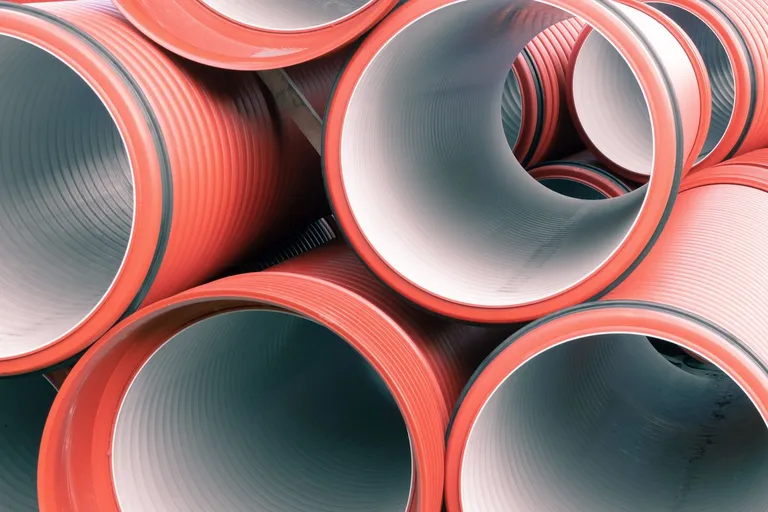
Plastics used in most industrial and transport applications, and particularly those used in higher fire hazard environments, are compounded with flame retardants to enhance their fire performance.

Several methodologies have been developed to assess the burning characteristics of materials so that the performance of the plastics themselves — and the products into which they are made — can be comparatively assessed. Some of these methods are simple flame tests and others can be used in numerical models.

Fire tests for plastics

6 matching test methods. Each card opens the full test method page.

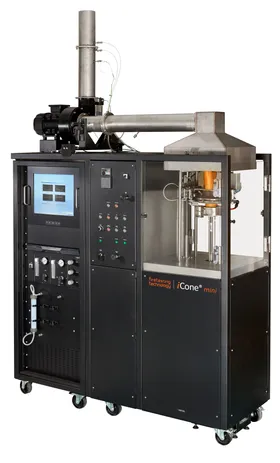
ISO 5660-1 · ASTM E1354

Cone Calorimeter

The most significant bench-scale instrument in fire testing — measures heat release, smoke production and mass loss under preset fire conditions.

Measures:
Heat release rate · Time to ignition · Mass loss rate · Smoke production rate
Markets:
Railway · Marine · Plastics
Related classification:
EN 45545-2
View test method

BS EN ISO 5659-2 · ASTM E662

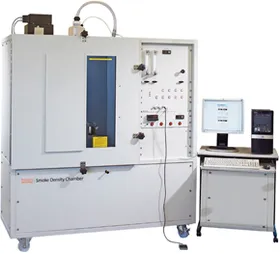
Smoke Density Chamber

Determines the specific optical density of smoke generated by solid materials and assemblies in a closed chamber.

Measures:
Specific optical density of smoke
Markets:
Railway · Plastics · Marine · Aviation
Related classification:
EN 45545-2 · IMO FTP Code
View test method

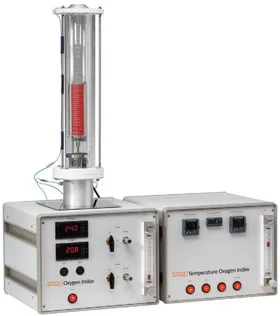
BS EN ISO 4589-2 · ASTM D2863

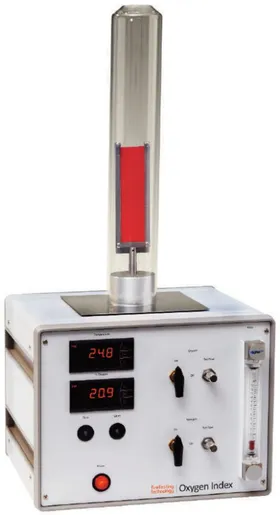
Oxygen Index — OI

Measures the minimum percentage of oxygen in a test atmosphere required to marginally support combustion.

Measures:
Oxygen index (%)
Markets:
Plastics · Railway
Related classification:
EN 45545-2
View test method

Need help choosing the right plastics test?

Tell us what you make and where it will be used. We will come back with the exact tests and the classification route to plan for.