intersciencefire

Classification route

EN 13501-1 — European CPR: Wall, ceiling, flooring and linear pipe thermal insulation products

Fire classification of construction products and building elements — Part 1: Classification using data from reaction to fire tests.

intersciencefire and our sister laboratories offer CPR testing in accordance with EN 13501-1. This standard splits products into three sets: construction products excluding flooring products; flooring products; and linear pipe and thermal insulation products. Most of the fire tests are used to assess products in all sets, whilst others are used for just one product set.

Each of these sets has classification levels A1, A2, B, C, D and E, and a non-performance-determined class F. Products in class A1 are mostly based on non-organic materials, and classification into this group is gained using EN ISO 1716 (determination of the heat of combustion) and the EN ISO 1182 non-combustibility test.

Classification into classes A2, B, C and D — the major classes inhabited by most products — requires testing using either the EN 13823 (SBI) or EN ISO 9239-1, and EN ISO 11925-2. Class E only requires testing to EN ISO 11925-2. Flooring products are tested using the EN ISO 9239-1 instead of the SBI (EN 13823).

Please note that electric cables have their own classification system, which is given in EN 13501-6.

Table 1 — Classes of reaction to fire performance for construction products excluding floorings

ClassTest methodsClassification criteriaAdditional classification
A1 EN ISO 1182¹ and EN ISO 1716 ΔT ≤ 30°C; and Δm ≤ 50%; and tf = 0 (i.e. no sustained flaming) — and PCS ≤ 2.0 MJ/kg¹ and PCS ≤ 2.0 MJ/kg² ²ᵃ and PCS ≤ 1.4 MJ/m²³ and PCS ≤ 2.0 MJ/kg⁴
A2 EN ISO 1182¹ or EN ISO 1716; and EN 13823 ΔT ≤ 50°C; and Δm ≤ 50%; and tf ≤ 20 s — or PCS ≤ 3.0 MJ/kg¹ and PCS ≤ 4.0 MJ/kg² ²ᵃ and PCS ≤ 4.0 MJ/m²³ and PCS ≤ 3.0 MJ/kg⁴ — and FIGRA ≤ 120 W/s; and LFS < edge of specimen; and THR600s ≤ 7.5 MJ Smoke production⁵ and flaming droplets/particles⁶
B EN 13823 and EN ISO 11925-2⁸ (exposure = 30 s) FIGRA ≤ 120 W/s; and LFS < edge of specimen; and THR600s ≤ 7.5 MJ — and Fs ≤ 150 mm within 60 s Smoke production⁵ and flaming droplets/particles⁶
C EN 13823 and EN ISO 11925-2⁸ (exposure = 30 s) FIGRA ≤ 250 W/s; and LFS < edge of specimen; and THR600s ≤ 15 MJ — and Fs ≤ 150 mm within 60 s Smoke production⁵ and flaming droplets/particles⁶
D EN 13823 and EN ISO 11925-2⁸ (exposure = 30 s) FIGRA ≤ 750 W/s — and Fs ≤ 150 mm within 60 s Smoke production⁵ and flaming droplets/particles⁶
E EN ISO 11925-2⁸ (exposure = 15 s) Fs ≤ 150 mm within 20 s Flaming droplets/particles⁷
F EN ISO 11925-2⁸ (exposure = 15 s) Fs > 150 mm within 20 s

Table 2 — Classes of reaction to fire performance for floorings

ClassTest methodsClassification criteriaAdditional classification
A1fl EN ISO 1182¹ and EN ISO 1716 ΔT ≤ 30°C; and Δm ≤ 50%; and tf = 0 (i.e. no sustained flaming) — and PCS ≤ 2.0 MJ/kg¹ and PCS ≤ 2.0 MJ/kg² and PCS ≤ 1.4 MJ/m²³ and PCS ≤ 2.0 MJ/kg⁴
A2fl EN ISO 1182¹ or EN ISO 1716; and EN ISO 9239-1⁵ ΔT ≤ 50°C; and Δm ≤ 50%; and tf ≤ 20 s — or PCS ≤ 2.0 MJ/kg¹ and PCS ≤ 2.0 MJ/m²² and PCS ≤ 1.4 MJ/m²³ and PCS ≤ 2.0 MJ/kg⁴ — and critical flux⁶ ≥ 8.0 kW/m² Smoke production⁷
Bfl EN ISO 9239-1⁵ and EN ISO 11925-2⁸ (exposure = 15 s) Critical flux⁶ ≥ 8.0 kW/m² — and Fs ≤ 150 mm within 20 s Smoke production⁷
Cfl EN ISO 9239-1⁵ and EN ISO 11925-2⁸ (exposure = 15 s) Critical flux⁶ ≥ 4.5 kW/m² — and Fs ≤ 150 mm within 20 s Smoke production⁷
Dfl EN ISO 9239-1⁵ and EN ISO 11925-2⁸ (exposure = 15 s) Critical flux⁶ ≥ 3.0 kW/m² — and Fs ≤ 150 mm within 20 s Smoke production⁷
Efl EN ISO 11925-2⁸ (exposure = 15 s) Fs ≤ 150 mm within 20 s
Ffl EN ISO 11925-2⁸ (exposure = 15 s) Fs > 150 mm within 20 s

Table 3 — Classes of reaction to fire performance for linear pipe thermal insulation products

ClassTest methodsClassification criteriaAdditional classification
A1L EN ISO 1182¹ and EN ISO 1716 ΔT ≤ 30°C; and Δm ≤ 50%; and tf = 0 (i.e. no sustained flaming) — and PCS ≤ 2.0 MJ/kg¹ and PCS ≤ 2.0 MJ/kg² and PCS ≤ 1.4 MJ/m²³ and PCS ≤ 2.0 MJ/kg⁴
A2L EN ISO 1182¹ or EN ISO 1716; and EN 13823 ΔT ≤ 50°C; and Δm ≤ 50%; and tf ≤ 20 s — or PCS ≤ 2.0 MJ/kg¹ and PCS ≤ 2.0 MJ/kg²² and PCS ≤ 1.4 MJ/m²³ and PCS ≤ 2.0 MJ/kg⁴ — and FIGRA ≤ 270 W/s and LFS < edge of specimen and THR600s ≤ 7.5 MJ Smoke production⁷
BL EN 13823 and EN ISO 11925-2⁸ (exposure = 30 s) FIGRA ≤ 270 W/s and LFS < edge of specimen and THR600s ≤ 7.5 MJ — and Fs ≤ 150 mm within 60 s Smoke production⁵ and flaming droplets/particles⁶
CL EN 13823 and EN ISO 11925-2⁸ (exposure = 30 s) FIGRA ≤ 460 W/s and LFS < edge of specimen and THR600s ≤ 15 MJ — and Fs ≤ 150 mm within 60 s Smoke production⁵ and flaming droplets/particles⁶
DL EN 13823 and EN ISO 11925-2⁸ (exposure = 30 s) FIGRA ≤ 2100 W/s; THR600s ≤ 100 MJ — and Fs ≤ 150 mm within 60 s Smoke production⁵ and flaming droplets/particles⁶
EL EN ISO 11925-2⁸ (exposure = 15 s) Fs ≤ 150 mm within 20 s Flaming droplets/particles⁶
FL EN ISO 11925-2⁸ (exposure = 15 s) Fs > 150 mm within 20 s

Table notes

  1. For homogeneous products and substantial components of non-homogeneous products.
  2. For any external non-substantial component of non-homogeneous products.
  3. For any internal non-substantial component of non-homogeneous products.
  4. For the product as a whole.
  5. Smoke production classes (Table 1): s1 = SMOGRA ≤ 30 m²/s² and TSP600s ≤ 50 m²; s2 = SMOGRA ≤ 180 m²/s² and TSP600s ≤ 200 m²; s3 = not s1 or s2. Floorings (Table 2): s1 = smoke ≤ 750 %·min; s2 = not s1. Linear pipe products (Table 3): s1 = SMOGRA ≤ 105 m²/s² and TSP600s ≤ 250 m²; s2 = SMOGRA ≤ 580 m²/s² and TSP600s ≤ 1600 m²; s3 = not s1 or s2.
  6. d0 = no flaming droplets/particles in EN 13823 (SBI) within 600 s; d1 = no flaming droplets/particles persisting longer than 10 s in EN 13823 (SBI) within 600 s; d2 = not d0 or d1. Ignition of the paper in EN ISO 11925-2 results in a d2 classification.
  7. Pass = no ignition of the paper (no classification); Fail = ignition of the paper (d2 classification).
  8. Under conditions of surface flame attack and, if appropriate to the end-use application of the product, edge flame attack. For flooring classes the critical flux is defined as the radiant flux at which the flame extinguishes or the radiant flux after a test period of 30 minutes, whichever is lower.

Test methods that contribute to EN 13501-1

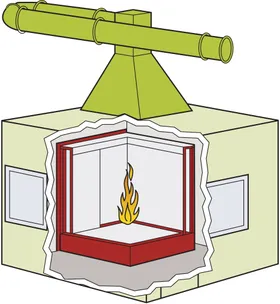
EN 13823

Single Burning Item Test — SBI

Reaction-to-fire testing for construction products exposed to thermal attack from a single burning item.

Measures:
Heat release (THR, FIGRA) · Smoke production (SMOGRA) · Lateral flame spread · Flaming droplets/particles
Markets:
Construction Products
Related classification:
EN 13501-1
View test method

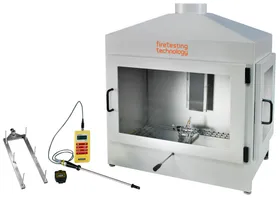
EN ISO 11925-2

Ignitability — Single Flame Source Test

Determines the ignitability of building products in the vertical orientation when subjected to impingement of a standard small flame.

Measures:
Ignitability · Flame spread (Fs) · Flaming droplets/particles
Markets:
Construction Products · Railway · Marine
Related classification:
EN 13501-1 · EN 45545-2 · IMO FTP Code
View test method

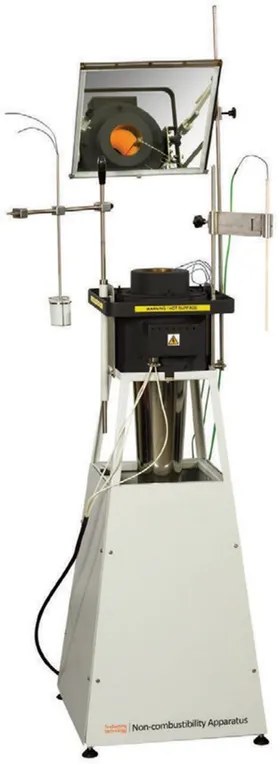
EN ISO 1182

Non-Combustibility Test

Determines the non-combustibility performance of homogeneous products and substantial components of non-homogeneous building products.

Measures:
Temperature rise (ΔT) · Mass loss (Δm) · Sustained flaming (tf)
Markets:
Construction Products · Marine
Related classification:
EN 13501-1 · IMO FTP Code
View test method

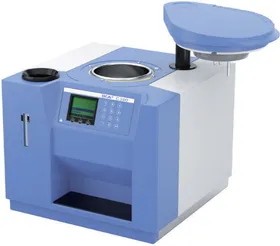
EN ISO 1716

Heat of Combustion — Bomb Calorimeter

Determines the potential maximum total heat release of a product when completely burning, regardless of its end use.

Measures:
Gross heat of combustion (PCS)
Markets:
Construction Products · Electric Cables
Related classification:
EN 13501-1 · EN 13501-6
View test method

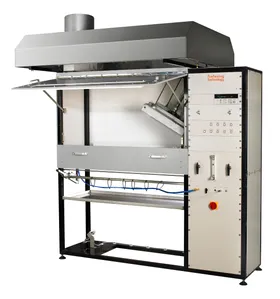
EN ISO 9239-1

Flooring Radiant Panel Test — FRP

Measures the critical radiant flux of horizontally mounted floor covering systems exposed to a flaming ignition source in a graded radiant heat environment.

Measures:
Critical radiant flux · Smoke production
Markets:
Construction Products · Railway
Related classification:
EN 13501-1 · EN 45545-2
View test method

Which EN 13501-1 class does your product need?

The required class depends on your product's end use and the national regulations of the market you sell into. Our technical team can confirm the classification route and the exact tests required.