intersciencefire

Classification route

EN 13501-6 — European CPR: Electric cables

Fire classification of construction products and building elements — Part 6: Classification of electric cables using data from reaction to fire tests.

Similarly to wall, ceiling, flooring and linear pipe thermal insulation products, all electric cables used in member states are tested using the same test methods and classified using the same classification system. Cables are tested using five test methods and classified by the provisions of EN 13501-6, a parallel standard to EN 13501-1 covering electric cable requirements.

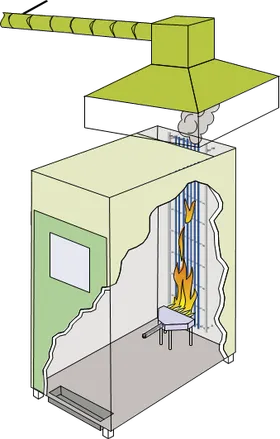
Of these standard tests, EN 50399 is the major test procedure for reaction to fire of cables. This test specification derives from work done in an EU funded project called FIPEC — Fire Performance of Electric Cables — performed by a research group consisting of SP, Interscience Communications, ISSEP and CESI. The FIPEC project included a study of cable installations and relevant reference scenarios as well as a comprehensive test programme of different kinds of cables. This, together with subsequent industry test data, was used in the development of the proposal for the European testing and classification system.

Two round robin exercises have been carried out on EN 50399: the first by the developers of the system, the FIPEC laboratories, and the second through CENELEC across many test sites. The results were good and comparable to the results of the SBI test used for linings in Europe. The test procedure is robust and well developed, and the results are validated for real fires by using reference scenarios in the FIPEC project.

The classification system is built in the same way as that used for linings and pipe insulation, and also includes the possibility to declare optional acidity of the smoke gases (sub-classes a1, a2 and a3). Both EN 50399 and the modifications to EN 13501 were developed in CENELEC TC20 WG10, along with the Extended Application rules for assessing cable family fire performance. During both the FIPEC and CEMAC projects, FTT fire scientists — now part of intersciencefire — were seconded to Interscience Communications to oversee calibration, test, data acquisition and analysis.

Table 4 — Classes of reaction to fire performance for electric cables

ClassTest method(s)Classification criteriaAdditional classification
Aca EN ISO 1716 PCS ≤ 2.0 MJ/kg¹
B1ca EN 50399 (30 kW flame source) and EN 60332-1-2 FS ≤ 1.75 m and THR1200s ≤ 10 MJ and peak HRR ≤ 20 kW and FIGRA ≤ 120 W/s — and H ≤ 425 mm Smoke production²⁵ and flaming droplets/particles³ and acidity⁴
B2ca EN 50399 (20.5 kW flame source) and EN 60332-1-2 FS ≤ 1.5 m; and THR1200s ≤ 15 MJ; and peak HRR ≤ 30 kW; and FIGRA ≤ 150 W/s — and H ≤ 425 mm Smoke production²⁶ and flaming droplets/particles³ and acidity⁴
Cca EN 50399 (20.5 kW flame source) and EN 60332-1-2 FS ≤ 2.0 m; and THR1200s ≤ 30 MJ; and peak HRR ≤ 60 kW; and FIGRA ≤ 300 W/s — and H ≤ 425 mm Smoke production²⁶ and flaming droplets/particles³ and acidity⁴
Dca EN 50399 (20.5 kW flame source) and EN 60332-1-2 THR1200s ≤ 70 MJ; and peak HRR ≤ 400 kW; and FIGRA ≤ 1300 W/s — and H ≤ 425 mm Smoke production²⁶ and flaming droplets/particles³ and acidity⁴
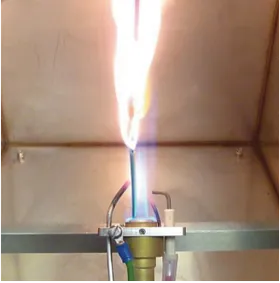
Eca EN 60332-1-2 H ≤ 425 mm
Fca No performance determined

Table notes

  1. For the product as a whole, excluding metallic materials, and for any external component (i.e. sheath) of the product.
  2. s1 = TSP1200s ≤ 50 m² and peak SPR ≤ 0.25 m²/s; s1a = s1 and transmittance in accordance with EN 61034-2 ≥ 80%; s1b = s1 and transmittance in accordance with EN 61034-2 ≥ 60% < 80%; s2 = TSP1200s ≤ 400 m² and peak SPR ≤ 1.5 m²/s; s3 = not s1 or s2.
  3. d0 = no flaming droplets/particles within 1200 s; d1 = no flaming droplets/particles persisting longer than 10 s within 1200 s; d2 = not d0 or d1.
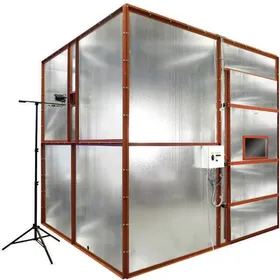
  4. EN 50267-2-3: a1 = conductivity < 2.5 µS/mm and pH > 4.3; a2 = conductivity < 10 µS/mm and pH > 4.3; a3 = not a1 or a2. No declaration = no performance determined.
  5. The smoke class declared for class B1ca cables must originate from the test according to EN 50399 (30 kW flame source).
  6. The smoke class declared for class B2ca, Cca and Dca cables must originate from the test according to EN 50399 (20.5 kW flame source).

Test methods that contribute to EN 13501-6

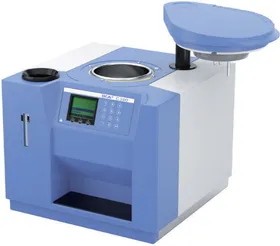
EN ISO 1716

Heat of Combustion — Bomb Calorimeter

Determines the potential maximum total heat release of a product when completely burning, regardless of its end use.

Measures:
Gross heat of combustion (PCS)
Markets:
Construction Products · Electric Cables
Related classification:
EN 13501-1 · EN 13501-6
View test method

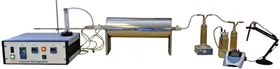
EN 60754-1 · EN 60754-2

Acidity of Gases from Cable Materials

Determines the degree of acidity of gases evolved during combustion of materials taken from electric cables by measuring pH and conductivity.

Measures:
Halogen acid gas content · pH · Conductivity
Markets:
Electric Cables
Related classification:
EN 13501-6
View test method

Which cable class do you need to reach?

From Eca single-cable testing through to B1ca with smoke, droplet and acidity declarations — our team can confirm the tests your cable products require.